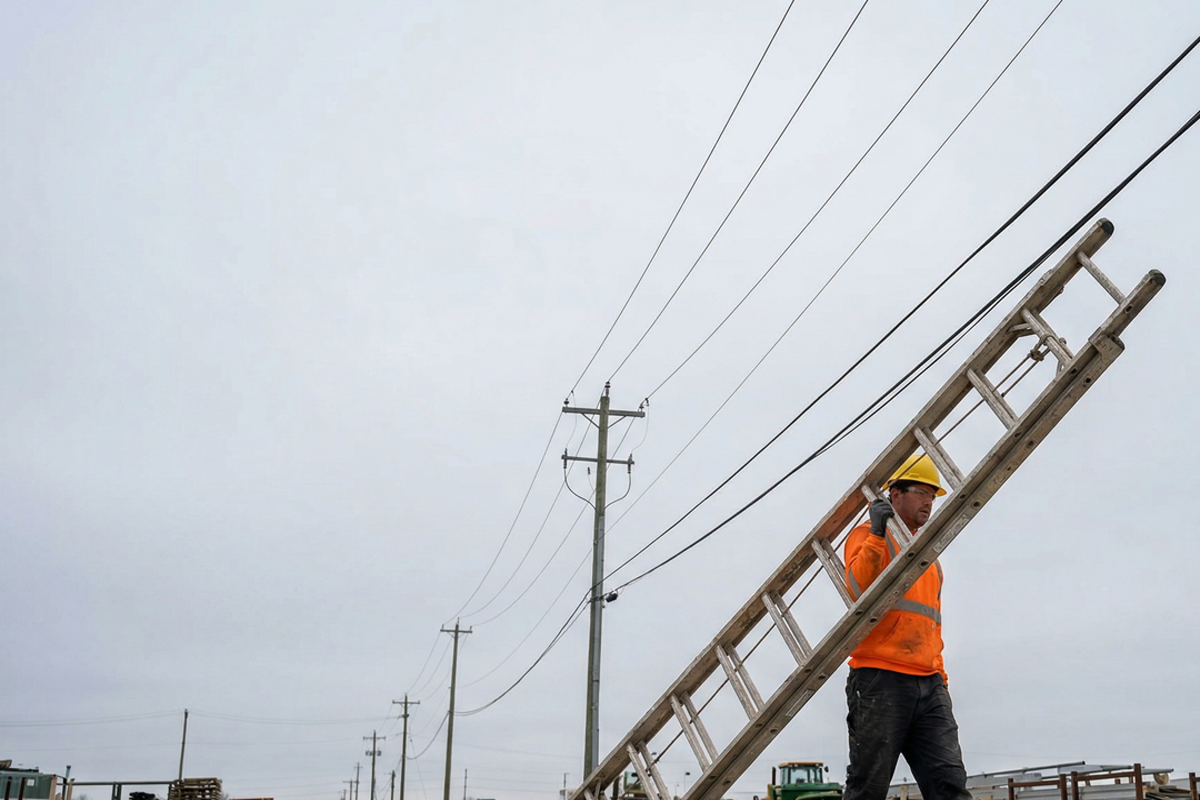
Key areas covered
- Overhead lines stay dangerous
- Inspect cords and tools every day
- Use the right protection
Electrical hazards demand distance, inspection habits, and respect for temporary systems that still carry lethal risk.
Overhead lines stay dangerous
Workers should treat overhead and exposed electrical sources as energized unless verified otherwise.
Why it matters
Distance mistakes with ladders, lifts, and materials can turn into fatal incidents fast.
Field note
If power is nearby, slow down and look up before the work starts.
Inspect cords and tools every day
Damaged cords, missing prongs, and improvised repairs create serious exposure even when the tool still works.
Why it matters
A fast inspection habit prevents people from trusting equipment just because it powers on.
Field note
Temporary power still deserves permanent respect.
Use the right protection
Ground-fault protection, lockout steps, and equipment rated for the job help reduce risk when power is present.
Why it matters
Electrical safety is not one control. It is a stack of controls and verification steps.
Field note
If you are unsure whether a circuit is controlled, stop and verify.