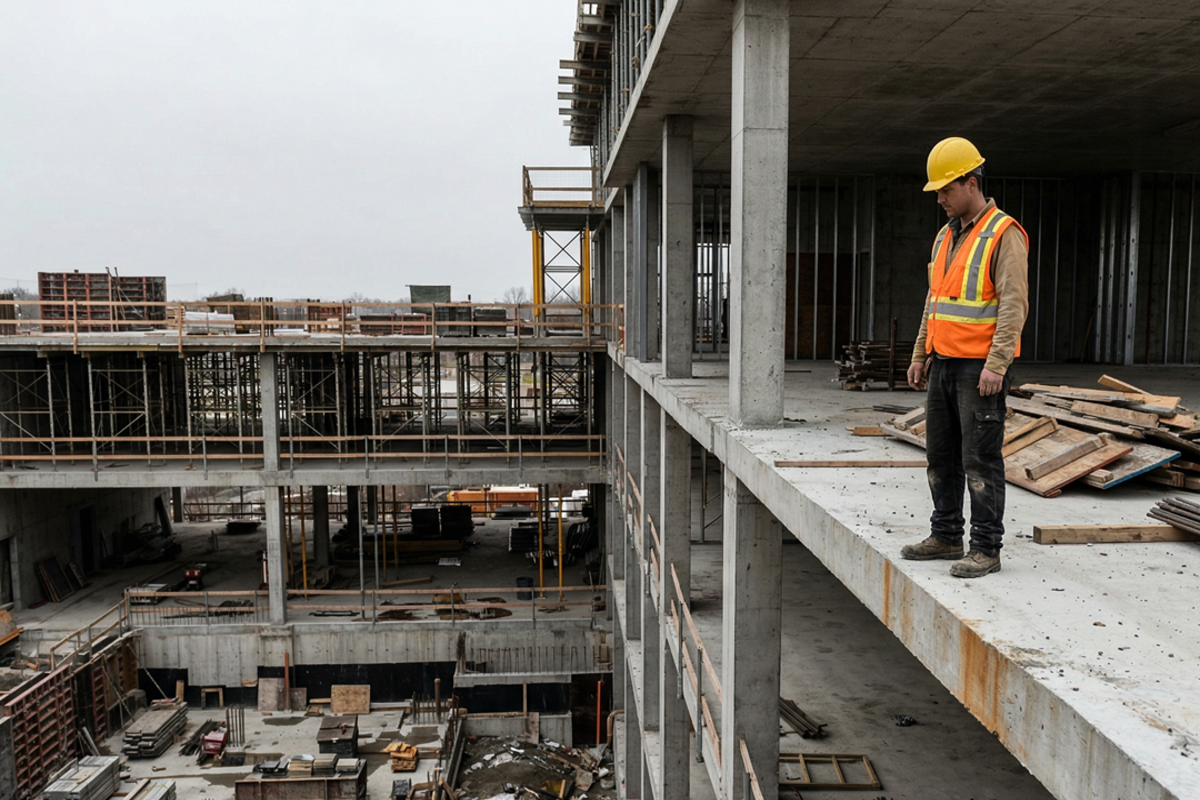
Key areas covered
- Falls remain the leading fatal hazard
- Know the 6-foot trigger
- Plan the work before the climb
Falls remain the most valuable construction study topic because the rules and habits show up everywhere on the jobsite.
Falls remain the leading fatal hazard
Workers need to recognize edges, holes, openings, and unsafe access points before stepping into exposure.
Why it matters
Fall hazards appear in everyday tasks, so a mobile-first prep app should keep this topic front and center.
Field note
Ask before every elevated task: what is the exposure and what protects me from it?
Know the 6-foot trigger
In many construction situations, fall protection is required at 6 feet or more above a lower level.
Why it matters
Threshold questions are common, but the more important point is building the habit before exposure starts.
Field note
The number matters because it drives fast decision-making before the task starts.
Plan the work before the climb
Safe elevated work starts with access, anchors, equipment checks, and a sequence that avoids rushed exposure.
Why it matters
Planning prevents the shortcuts that turn routine access into a fatal event.
Field note
Good planning is protection, not paperwork.